Enjoyin’
This one goes out to the people who try to preach me into believing in God.
“Coke Is It“: Sasha Frere-Jones on cocaine and hip-hop.
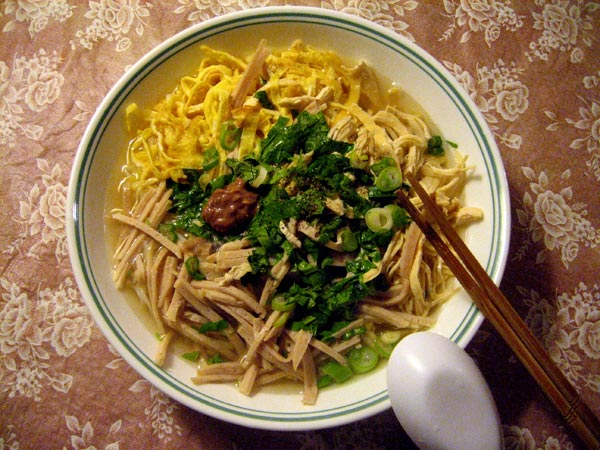
Hip-hop may be dead in the US, but just started in Viet Nam. Little Kim represents the ‘hood of Ha Noi.
This one goes out to the people who try to preach me into believing in God.
“Coke Is It“: Sasha Frere-Jones on cocaine and hip-hop.
Hip-hop may be dead in the US, but just started in Viet Nam. Little Kim represents the ‘hood of Ha Noi.
In retrospect, Visualgui.com came online as a portfolio. After Vassar scooped me up, its main purpose is no longer needed. I then turned the site into a blog, which was my personal journal. It didn’t last too long because the world don’t need to know about my personal life. So I scrapped the journal and started music writing. Whether the CDs were from singers, readers, or my own purchases, I used to review every album I could get my hands on. Thanks to the Internet, music is much easier to get these days; therefore, reviewing music is no longer my top priority. So what will be next for Visualgui.com? I have no idea. It will definitely be around, and I’ll continue to post, but will not devote my time to it like I used to.
It’s time for some Christmas jams.
I posted Bill Evans’s piano solo of “Santa Claus is Coming to Town” last year, but it’s so damn good that I am posting it again. Then a short but sweet performance of “Angels We Have Heard On High” by my friend Pham Hong Hanh. Her album, Give Thanks, is fantastic for the holidays. Of course I have to include “Jingle Bells,” the first Christmas song I ever heard, and Diana Krall’s scatting reminds me of how I tried to sing the song without knowing a word of English. Finally, even “Satan Takes a Holiday” (a swing joint from Tommy Dorsey) and so do I.
I am mad “Crazy” for loving you, baby!
Only nine months after the release of Fishscale, Ghostface is giving us More Fish. The album is choked full of guest appearances including Trife Da God, Red Man, and Kanye West. A Ghost’s joint, however, should only be Ghost alone spitting sixty-something bars straight with no hooks, and no one else should interrupt his flows—not even an r-&-b singer. The remake of Amy Winehouse’s “You Know I am No Good” is the only exception. Ghost’s energetic delivery heightens the tune with hip-hop and jazz flavor, and his aggressive crescendo increases the sizzles to the bittersweet affair: “I love you like my coffee: so hot and so sweet.” What makes Ghost so damn pleasure to listen to is his restless drive and his astonishing breath control. Even when he rhymes over Eric B.’s old-school beat and flips Rakim’s script, Ghost proves that he still got juice.
With all the hip-hop-is-dead controversies floating around, Clipse are the real hip-hop’s saviors. On their newest release, Hell Hath No Fury, Pusha-T and Malice cut their coke-slinging tales like movie directors over the Neptunes’ dark, dense scores. From one episode to the next, the album’s twelve solid tracks are packed with accessible images, vivid rhyme patterns, restless flows, and precise productions. The Virginia duo had stepped their game up and crafted a masterpiece that could be experience again and again with guilty pleasures: “I’m at your door, your eyes are like ‘why are you here?’ / Judging by my steel, I got something to do here. / Give up the money or the angel cries two tears / Front of your crib sounding like Chinese New Year.”
Mezzoblue new design: clean, simple, and wide.
Mariah Carey’s trunk is all I want for Xmas.
Hoover: Hip-hop’s cleaner.
Story of Paul Nguyen is deep from his soul. All these years of blogging, I never have the heart to write something like that.
In 1959, Ornette Coleman broke into the scene and set jazz free. His groundbreaking The Shape of Jazz to Come earned him the avant-garde stature and changed the rules of the game—less rules that is. Today, Coleman’s Sound Grammar is as fearless as it was five decades ago. At 76, his tone and virtuosity on the alto saxophone and trumpet had yet to suffer. Backed up by his son Denardo Coleman on the trap set, Greg Cohen on pizzicato bass, and Tony Falanga on bowing bass, Coleman wailed like a wild horse roaming free on “Jordan,” and stung like killer bees on “Song X.” Both tunes sounded chaotic on the surface, yet embedded inside them were deep, sensational melodic lines. On slow-tempo, sweet ballad, “Sleep Walking,” the interaction between Coleman’s sentimental alto and Falanga’s soul-sawing bass was breathtaking and captivating. Although he took one of my favorite instruments, the piano, out of the jazz band, I ain’t mad at him. With complete freedom from harmonic lines, Coleman’s unmistakable solos together with the hypnotic rhythm section created irresistible and unforgettable experiences.
At 60, Keith Jarrett still had his chops as a solo pianist. The Carnegie Hall Concert marked a historical event for the master of improvisation. With two hours of nothing but pure energy, passion, mood, and emotion, Jarrett poured his heart and soul out on the keys as if it was his last chance to perform. If you’re a solo-piano freak like me, this live album is no way to be missed.