Poem Translation

Natalie Friedman in the Learning and Writing Center is a wonderful English tutor. In addition to working closely with me on my grammar, she has been very encouraging. She motivates me to translate music lyrics or poems to improve my word choices. So here is my first translation of Tran Gia Thoai’s “Con Ngua Que,” an inspiring poem about a crippled horse. The message behind the poem is interesting and could be applied to human beings. I tried my best to stay close to the original context and keep the same syllables. Hope you will enjoy it.

Crippled Horse

Because in a race
A horse used much strength,
Broke his leg, fell down,
He became useless.

Owner is heartless,
Keeps feeding, wastes grass.
Can’t just let them go,
So he cuts his fresh.

Horse is sad in tears,
Thought he was so strong,
Won many races
Broke many records.

Now he’s deeply hurt,
No one seems to care,
Yet wanting to slice
His meat, skin, and bone.

Regret for no love
If goes by the law,
Owner is at fault,
Demands for support.

Love and care for yourself,
In case of deep steps, lose life.

Can’t Stop Won’t Stop

In his book Can’t Stop Won’t Stop: A History of Hip-Hop Generation, Jeff Chang drops it like it’s hot. From MCing to DJing to b-boying to graffiti writing, Chang’s insightful knowledge of hip-hop culture combined with his passion for rap music make this book an important read. For those, including me, who not only love the art, but also want to learn what it was like living in the Bronx – birthplace of hip-hop – during the ’70s, this book will guarantee to supply a vivid reading experience.

The history of hip-hop is intriguing, stirring, and empowering. From the blackout riot on July 13, 1977 to the period when Clive Campbell (DJ Kool Herc) hooked up his father’s powerful system for the first time, the genuineness of Chang’s filmic structure provides readers with clear visual presentation of the subject. Whether he describes a scene of b-boy dancing or graffiti painting, his straightforward approach and natural style allow the images to be accessible.

On a personal level, I praise Chang for staying on point when he delves into the racial issue between Black American and Asian American. On his controversial “Black Korea,” Ice Cube voiced his opinion against Asians, accused the storeowners (Vietnamese, Korean, Japanese, Chinese and Cambodian) of trying to take over the hood. Not only on this particular piece but also throughout the book, Chang is recapturing, not recreating, the chronicle of hip-hop through his extensive research and personal interviews.

Although Can’t Stop Won’t Stop is longer than 500 pages, I couldn’t stop once I started to read. Chang’s work has enriched my knowledge on hip-hop, its elements, and its political contents. Hip-hop has made its way into the colleges’ and universities’ curricula. Even a highly selective private institution like Vassar, which is dominated by a Caucasian student body, is embracing hip-hop culture by introducing Hip-hop 101 club. Therefore, I would not be surprised to see this book as part of a required reading list.

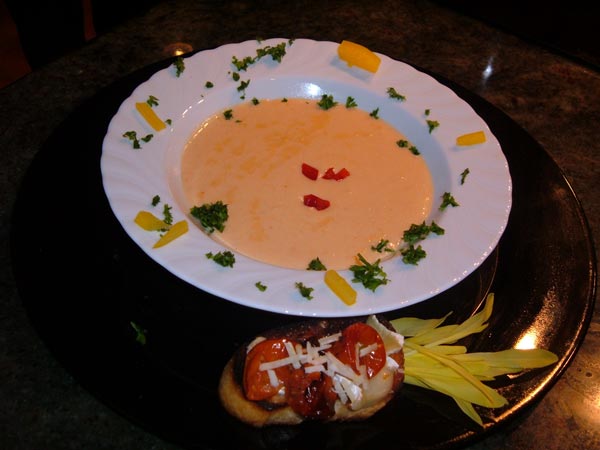
Xoi Dua La Dua (Coconut Sweet Sticky Rice with Fragrant Leaf Flavor)

Check out the natural green of Xoi Dua La Dua, isn’t it beautiful? I not only love the color of la dua (fragrant leaf) but also its exquisite aroma and tang. Waking up in the morning smelling the steam of Xoi Dua La Dua is just reviving. Forget about Donkin’ or Krispy Kreme donuts, just give me a handful of Xoi Dua La Dua with a cup of coffee and I am all set for the morning.

War and Beauty (Tham Cung Quy Phi)

In a nutshell, two of the most powerful people in Forbidden City are the emperor and whomever he loves. As a result, women would not only do anything to win his heart but also destroy anyone who gets in their way, and that is War and Beauty.

The four women who responsible for keeping the long television series engaging are Sharen Tang, Maggie Cheung, Charmaine Sheh, and Gigi Lai. Their exceptional performances stay with viewers even after the film is ended. We love them, hate them, pity them, but cannot forget them. Beside beauty, each woman left something for us to remember her by. Yu Fei (Sharen Tang) is strong, smart, and unapologetic. Although her emotional expressions are written all over her face, what she has in mind is not easy to predict. Whether being good or evil, she is never unconvincing. Onn Sin (Maggie Cheung) is kind-hearted, intelligent, and highly witty; therefore, she became the most beloved concubine. Yee Shun (Charmaine Sheh) is elegant, quiet, and cleverly wicked. Her evilness is forgivable because who would want to hurt that calm and rare beauty? Yuk Ying (Gigi Lai) appears to be a pretty girl with no brain on the surface, but deep down she is calculated and knows exactly what she is doing. As these four girls plotting their ways to the top, we get to know their personality and understand why they become heartless.

Beside the performances, the script is close to perfect. The tightly structured writing leaves no room for these actresses to wipe their tears. As soon as a scheme is wrapping up, another one occurs. The biggest flaw, however, is the emperor’s role. They have done a great job of keep him off the screen for the first quarter, but then he comes in. I wonder if it is possible that he would never appear. Let the viewers be the emperor. It’s more exotic to have these beautiful girls trying to seduce me, the viewer, instead of the old man.

Of course, the film would not be complete without the soundtrack and costumes. The theme song, which consists of traditional instruments and a humming voice from a female vocalist, is dramatic, eerie, and haunting. The track floats like a ghost passing through Forbidden City leaving me goose bums. The traditional costumes are aesthetically beautiful. They are rich in detail with great color combination and looking fabulous on these gorgeous women.

Although War and Beauty is a traditional film, a little use of technology would not hurt, but enhances the experience. The 3D modeling of Forbidden City is well built and the transition effect from one place to another is fantastic. It gives viewers a sense of how big the palace is. The entire film takes place in the palace, but there are more than enough picturesque scenes to dazzling the viewers’ eyes. Beside, who would pay attention to the scenes when our eyes are glued to the girls?

Remembering Trinh Cong Son

Four years ago on this day, we lost one of the most talented Vietnamese songwriters. Although Trinh Cong Son is no longer with us, his legacy lives on. His timeless songs will remain forever in our hearts. To show my appreciation to the most respected musician, here is my little tribute: “Like a Word Goodbye.” TCS RIP!

My most listening Trinh’s albums:
Cam Van’s Xin Cho Toi
Hong Nhung’s Thuo Bong La Nguoi
Ngoc Lan’s Hat Cho Que Huong Viet Nam
Nguyen Khang’s 10 Tuyet Khuc Trinh Cong Son
Thanh Lam’s Ru Doi Di Nhe
Thanh Lam’s Ru Mai Ngan Nam
Tuan Ngoc’s Dem Thay Ta La Thac Do

Dam Vinh Hung – Gio H

If Dam Vinh Hung’s second live show, Gio H, is not as exciting as his first, Trai Tim Hat, that is because he is not new anymore and we know how his strategy works. Despite his poor judgment on the outfits and his rhythmless dance steps, his vocal wizardry is still the whole show. His strong voice allows him to performance twenty songs live, no lip-sync required.

Hung covers many popular songs from his last three albums including Nguyen Nhat Huy’s “Neu Co Yeu Toi,” Trinh Cong Son’s “Ben Doi Hiu Quanh,” Duy Manh’s “Giay Phut Chia Xa,” and Truong Le Son’s “Chen Dang.” Like the first concert, he invites guest singers to join him. Aside from the returning of My Tam (she looks so sensual in that white Vietnamese long dress) and Hong Ngoc, the special appearance of his mentor Thanh Lam is the best part of the show. Their duet performance on Thanh Tung’s “Giot Nang Ben Them” is breathtaking, and Lam’s vocal manipulation is amazing. Supplemented by Le Minh Son’s intricate finger-picking guitar, both Lam and Hung are remarkable on Thuan Yen’s “Chia Tay Hoang Hon.” Another beautiful collaboration is Tuong Van’s “Tieng Gio Xon Xao.” Backed up by AC&M, Hung gives a fantastic a cappella presentation.

Hung hits the mark on most of his performances except for a few. Despite the contemporary jazz arrangement, the remix version of Tran Quang Nam’s “Muoi Nam Tinh Cu” doesn’t sound fresh at all. Hung doesn’t seem to float with the beat. His duet with Nhu Y on Nguyen Nhat Huy’s “Dem Co Don” is a mismatch. When they sing the chorus, her voice is nowhere to be heard. The show is closed with “Feliz Navidad,” which becomes an incredibly annoying song, and Hung’s imperfect English only makes it worse. No one is perfect, but at least Hung gives a hundred percent of his effort on Gio H. Even though his style is not surprising anymore, the concert is still enjoyable.

Oh My Homeland!

During his trip in Viet Nam, songwriter Pham Duy was approached by a young innocent girl from Hau Giang selling “ve so” (lotto). He wanted to help by offering some money but the girl refused. She requested that he would buy some “ve so” from her. After buying the whole book of her “ve so” and walking away, the girl called him back and gave him her hairclip to thank him for what he did. Touched by the little girl, he penned down a song called “Chiec Cap Toc Thom Tho” (Fresh Scent of a Hairclip) to share his interaction with the little girl and his experience in our homeland. The inspirational lyrics along with Mong Thuy’s melancholic vocals warm up my heart. I need to go back, back to where I belong.

Do Bao – Canh Cung

I took a few days off work to unwind and chill with the fam. Surprisingly, the album I listened to the most while relaxing was Do Bao’s Canh Cung (Bow Back). Unlike his intricate and colorful production on Nhat Thuc, Canh Cung featured easy-listening melodies and easy-following lyrics that are attractive to young audiances.

The CD opener, “Buc Thu Tinh Thu Hai” (The Second Love Letter), is the catchiest track on the record. Backed by a sensational arrangement, Ho Quynh Huong leads a persuading performance that has been stuck in my head ever since I first heard it. I am still humming to the tune even though I can’t remember the words. True to its title, “Dieu Ngot Ngao Nhat” (The Sweetest Thing), is the sweetest performance on the album by the sweetheart Tran Thu Ha. Beside her voice, Huy Dat’s flute and Tran Hoa’s whistle added a marvelous sound to Do Bao’s jazz arrangement.

Canh Cung also featured two male vocalists: Tuan Minh and Le Hieu. Unfortunately their voices are lost because female singers dominate the album. Two of the most powerful performances are from Ngoc Anh and Khanh Linh. While Ngoc Anh’s voice is deep and foggy on “Anh Da Khac Xua” (You Are Not Who You Used to Be), Khanh Linh’s vocal is clear and pitch-perfect on “Dieu Hoang Duong Nhat” (The Most Absurd Thing). Each brings a unique style to Do Bao’s compositions.

As a young musician, Do Bao offers some fresh vibes to the Vietnamese music. His freshman effort, Canh Cung, demonstrates his writing and producing skills. He has a style of his own that is both exclusive and pleasing to the ears.

Tu Khuc Thuy Mi – Nhung Vet Chung

If I were the producer of Asia Entertainment, I would invite Thuy Mi to the annual Mua He Ruc Ro (Radiant Summer) event to showcase our Vietnamese-American multi-talented woman. According to her website and the credits on her album, she is the software engineer, songwriter, singer, guitar player, web designer, and graphic designer. She has everything I ever wanted: a Masters degree, a creative mind, and a handful of original songs. Her other talents, especially web design, are interesting, but they are beyond the scope of this article, and so, I will focus on her music.

As a musician, Thuy Mi is innovative. Her compositional skills, her lyrical spellbinding beauty, and her passion for jazz turn her into a sensation. Her luminescent debut Nhung Vet Chung (rough translation: the Scars of Life) featured ten “tu khuc” (self expression) songs recollecting her personal experience. Her compositions, which are based not on precision but passion, offer the audiences an intimate listening atmosphere. For instance, she pours her heart out on the title track “Nhung Vet Chung.” Accompanied by Thong M. Do’s soft and clear acoustic guitar, her rich, perfectly placed voice enters: “Co mot chang doi buon vo nguyen co / thuong canh la roi, xot nhanh hoa tan / chi mot minh lang le, khoc mot manh doi / ta voi ta thoi” (loose translation: A period of life that is sad without a reason / regret for the fallen leaf, pity for the withered flower / quietly alone, crying for a part of life / by myself and I). She writes lyrics that mirror her life. Through her melancholy voice, she connects with music and reaches the listeners.

Thuy Mi’s fine taste in jazz aesthetics makes her an interesting new songwriter. On “Mot Lan” (One Time), she leads an effortlessly smooth performance that is enhanced by the cascading jazz chord and mellow vibe arranged by Le Tu Phong. Besides the composer herself, the record is molded together with the help of four top-notch vocalists -Tuan Ngoc, Nguyen Khang, Thanh Ha, and Diem Lien – at their best.

Each of the vocalists brings a unique flavor to the record. Tuan Ngoc’s meticulous phrasing and his expressive delivery give spirit to “Em Van Do” (You Still There) and soul to “Em Ve Chi De Xa Toi” (You Come Back To Leave Me). As Nguyen Khang goes sentimental on “Chieu Dong” (Winter Evening), Vu Tru’s violin infuses despondency into the track. Khang’s gravelly voice married to a blues melody creates “Chung Nhu” (Supposedly) to be a masterpiece. While Thanh Ha’s intoxicating timbres match the jazzy chords on “Niu Lay Doi Nhau” (Grab Onto Each Other’s Life), Diem Lien’s thin and delicate voice blends naturally into the glimmering grooves on “Chan” (Bored). Unlike what the title suggested, “Chan” is anything but boring.

Aside from the vocalists and the composer, the album would not be complete without the brilliant production, mostly handled by Le Tu Phong, and two tracks from Ho Dang Long. Their mesmerizing jazzy sounds are the delicious butter that melts inside the hot breads of the vocals. And just like bread and butter, together they have produced an impressive debut that can be complemented by a bottle of fine wine. Nhung Vet Chung raises a glass and toasts to the possible, an aesthetic work that is elegant, intricate, and expansive. Thuy Mi, please keep on feeding us delightful dishes of soul. I am already hungry for more even though I just ate.